The Great Ocean Road: a living memorial
Published on 24 April 2026
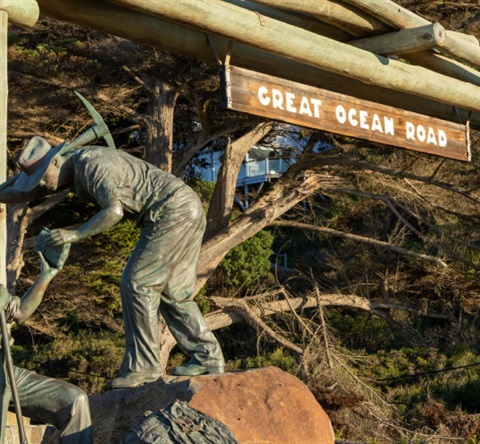
It’s easy to take the Great Ocean Road at face value. The views, the cliffs, and the ocean are stunning in their majesty.
But it’s more than just a tourist trail; it’s a memorial. In fact, it’s the largest war memorial in the world.
Stretching 243 kilometres from Torquay to Allansford near Warrnambool, the Great Ocean Road was the vision of people like William Calder and Howard Hitchcock, but it was built by around 3,000 returned servicemen after the First World War.
Many of them came home carrying the weight of what they’d seen. Still, they picked up shovels and carved a road into one of the most rugged coastlines in the country.
But it wasn’t just about connecting towns, it was about honouring those who didn’t make it back.
Opened in 1932, the road has become one of Australia’s most recognised journeys, drawing millions each year. But its original purpose hasn’t changed, it remains a lasting tribute to sacrifice, resilience and mateship.
That connection is felt most strongly on ANZAC Day.
Across the coast, communities gather at dawn and throughout the day to remember those who served, and those who never returned. Along the Great Ocean Road, those services carry an added weight, set against a landscape shaped by the very people we’re there to honour.
If you’re planning to attend a service this year, details for local commemorations can be found via RSL Victoria.
However you mark the day, whether at a service, or simply pulling over somewhere along the coast, it’s worth remembering what this road really is.
Not just a drive.
A legacy.
Lest we forget.