National Biodiversity Month - Boneseed
Published on 23 September 2026
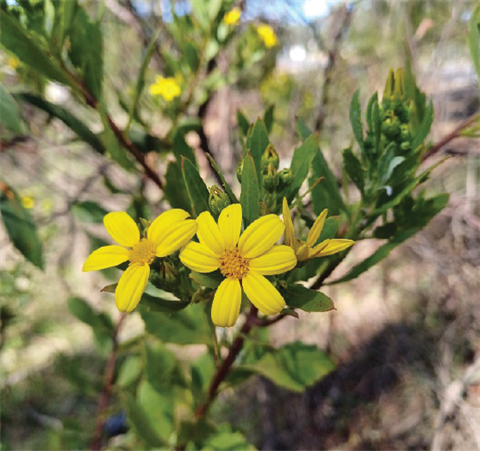
Five things you might not know about boneseed
September is Biodiversity Month, a chance to celebrate the plants, animals and ecosystems around us and take a closer look at what it takes to protect them.
Sometimes that means tackling the things putting pressure on them.
One of those is boneseed.
With its bright yellow flowers, boneseed can be easy to spot along parts of the Great Ocean Road coast during spring. But behind those flowers is one of Australia’s most significant environmental weeds.
Here are five things you might not know about boneseed, and why managing it matters.
1. One plant can produce up to 50,000 seeds a year
That’s a lot of potential boneseed from a single plant.
Mature boneseed plants can produce up to 50,000 seeds each year, allowing infestations to grow quickly when they are left unmanaged.
As boneseed establishes, it competes with native vegetation for space and resources. Dense infestations can reduce the diversity of native plants, with flow-on effects for the wildlife that relies on those plants for food and habitat.
2. Its seeds can survive in the soil for at least 10 years
Removing a mature boneseed plant doesn’t necessarily mean the job is finished.
Its seeds can remain viable in the soil for at least a decade, creating a long-lasting seed bank beneath an infestation.
Even after the mature plants have been removed, new seedlings can continue to appear for years.
That’s why follow-up treatment is such an important part of boneseed control. Returning to treated areas and removing new growth helps prevent the weed from becoming established again and gives native vegetation a better opportunity to recover.
3. Boneseed knows how to travel
Boneseed spreads by seed, and those seeds have several ways of getting around.
Birds and other animals can carry them away from existing plants, while water movement can spread them into new areas. Seeds can also be moved when contaminated soil is transported.
That ability to travel means controlling established infestations is only part of the challenge. Preventing boneseed from spreading into areas where it hasn’t previously been established is important too.
4. It’s a Weed of National Significance
Boneseed is recognised as a Weed of National Significance because of its invasiveness, ability to spread and impact on native ecosystems.
It can form dense infestations that outcompete native plants and reduce the ability of native trees and shrubs to regenerate.
And when plant diversity is lost, the effects don't stop with the plants.
Native birds, insects, reptiles and other wildlife all depend on healthy and diverse vegetation for food, shelter and habitat.
Controlling boneseed is therefore about much more than removing a weed. It is part of protecting the biodiversity of the coast.
5. Long-term control is making a difference
Managing a weed with a seed bank that can remain in the ground for more than a decade takes persistence.
But that work can deliver significant results.
Mapping undertaken for our Coastal Vegetation Strategy showed mapped boneseed infestations reduced from 41.5 hectares in 2015 to 19.3 hectares in 2021, a reduction of more than half.
Conservation work has continued since then, with ongoing control and follow-up treatment in priority locations helping prevent reinfestation and supporting the recovery of native vegetation.
The numbers are an important measure of progress, but the bigger goal is a healthier and more diverse coastal environment.
That means more room for native plants to grow, better habitat for wildlife and stronger ecosystems into the future.
Protecting biodiversity takes time
Boneseed is a good example of why weed management is rarely a one-off job.
A plant removed today may have already left seeds behind that can emerge years from now. That makes monitoring, follow-up treatment and long-term planning essential.
This Biodiversity Month, it’s also a reminder that some of the most important work protecting the Great Ocean Road coast happens one plant, one patch and one follow-up visit at a time.
Find out more about our weed management and Coastal Vegetation Strategy.